
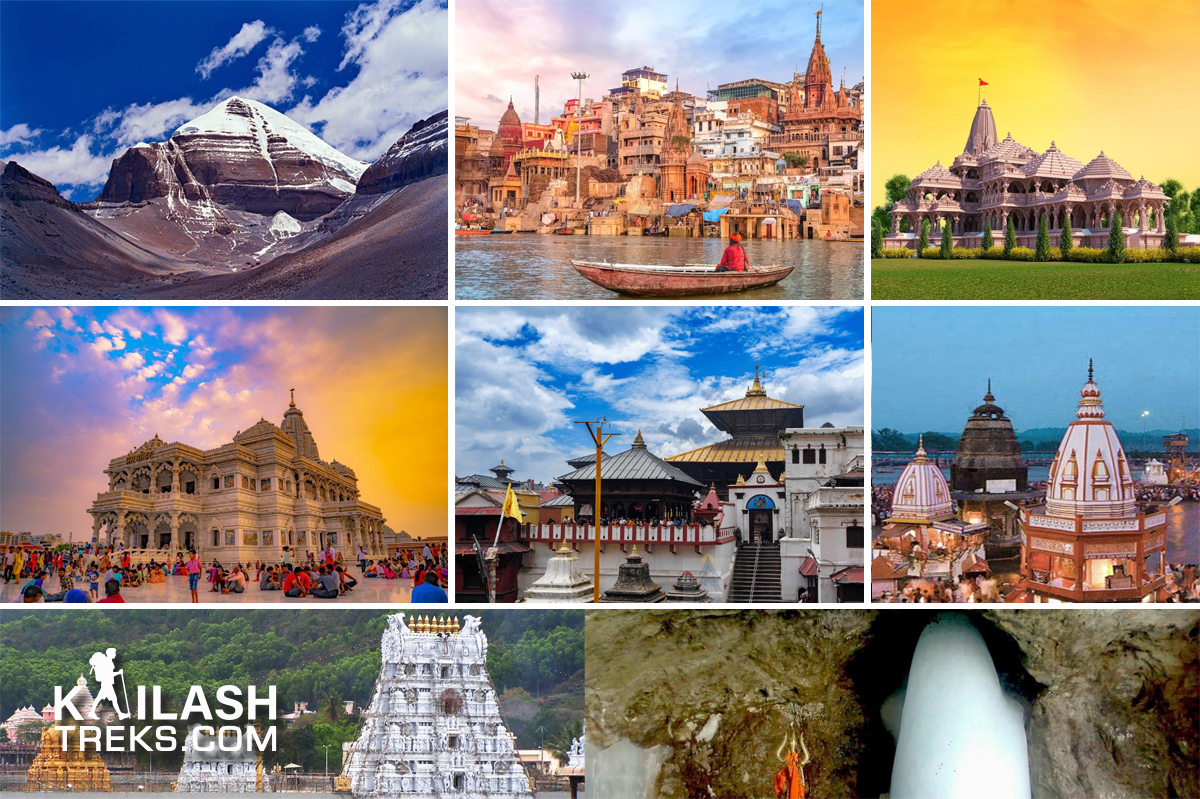
India, often referred to as the Land of Faith, is home to countless sacred sites that have drawn seekers, saints, and devotees for thousands of years. These pilgrimage destinations, deeply woven into Hindu philosophy and mythology, are more than just physical places — they are pathways to inner peace, spiritual growth, and divine connection.
Whether you seek liberation (moksha), healing, blessings, or deeper devotion, here’s a guide to the most revered Hindu pilgrimage sites you should consider for your spiritual journey.
🕉️ 1. Varanasi (Kashi), Uttar Pradesh
-
Significance: The oldest living city in the world, said to be founded by Lord Shiva.
-
Why Visit: A dip in the Ganga at Varanasi is believed to cleanse one of all sins. It’s also considered auspicious to be cremated here.
-
Highlight: Evening Ganga Aarti at Dashashwamedh Ghat.
🛕 2. Rameswaram, Tamil Nadu
-
Significance: One of the Char Dhams and associated with Lord Rama.
-
Why Visit: According to Ramayana, Lord Rama built the bridge to Lanka from here. The Ramanathaswamy Temple houses one of the 12 Jyotirlingas.
-
Highlight: Bathing in the 22 temple wells is part of the purification ritual.
🔱 3. Kedarnath, Uttarakhand
-
Significance: A sacred Jyotirlinga and part of Char Dham Yatra in the Himalayas.
-
Why Visit: It is said to have been built by the Pandavas and is a powerful site of Lord Shiva.
-
Highlight: Trek through the majestic Himalayas; best visited from May to October.
🧘 4. Mount Kailash & Lake Mansarovar (Tibet)
-
Significance: Believed to be the abode of Lord Shiva, sacred to Hindus, Buddhists, Jains, and Bön followers.
-
Why Visit: The Kailash Parikrama and a holy dip in Mansarovar are believed to grant spiritual liberation.
-
Highlight: The 3-day trek around Mount Kailash is a life-changing experience.
🌸 5. Vaishno Devi, Jammu & Kashmir
-
Significance: Dedicated to Maa Vaishno Devi, a powerful form of Shakti.
-
Why Visit: The cave shrine attracts millions annually seeking the goddess’s blessings.
-
Highlight: Trek to the shrine through the Trikuta Hills or use helicopter/palanquin services.
🔔 6. Tirupati Balaji, Andhra Pradesh
-
Significance: Home to Lord Venkateswara (Balaji), a form of Vishnu.
-
Why Visit: One of the richest and most visited temples in the world.
-
Highlight: Devotees often offer hair as a symbol of devotion and surrender.
🌄 7. Badrinath, Uttarakhand
-
Significance: Dedicated to Lord Vishnu; one of the Char Dhams.
-
Why Visit: Nestled in the Himalayas, it is one of the holiest Vishnu temples.
-
Highlight: Visit between May and November due to weather constraints.
🌊 8. Dwarka, Gujarat
-
Significance: The legendary kingdom of Lord Krishna, and part of Char Dham.
-
Why Visit: The Dwarkadhish Temple is a symbol of Krishna's glory and devotion.
-
Highlight: Combine with a visit to Bet Dwarka, believed to be Krishna’s residence.
🔥 9. Amarnath Cave, Jammu & Kashmir
-
Significance: Houses the naturally formed ice Shivling, symbolizing Lord Shiva.
-
Why Visit: Trekking to this sacred cave is both physically challenging and spiritually rewarding.
-
Highlight: Visit during the annual Amarnath Yatra (July-August).
🌞 10. Kanchipuram, Tamil Nadu
-
Significance: One of the Sapta Puri (seven holiest cities in Hinduism).
-
Why Visit: Known as the City of Thousand Temples, dedicated to both Shaivism and Vaishnavism.
-
Highlight: Visit Kamakshi Amman Temple and Ekambareswarar Temple.
🧭 Bonus: Char Dham & Sapta Puri – The Ultimate Pilgrimage Circuits
-
Char Dham (by Adi Shankaracharya): Badrinath, Dwarka, Puri, Rameswaram
-
Sapta Puri: Ayodhya, Mathura, Haridwar, Kashi, Kanchipuram, Ujjain, Dwarka
These are not just geographical locations — they are gateways to divinity.
🙏 Tips for Spiritual Travelers
-
Respect local customs and dress modestly.
-
Early morning darshan is considered most auspicious.
-
Carry prayer items, cash (in small denominations), and a water bottle.
-
Be mindful of crowds during major festivals and make bookings in advance.
-
Physical preparation is important for high-altitude or trekking-based yatras.
✨ Conclusion
Embarking on a Hindu pilgrimage is a transformative journey — one that unites body, mind, and soul. Whether you visit the Himalayas in search of Shiva’s presence or bathe in the Ganga for purification, each step is filled with purpose, and every destination offers a deeper glimpse into the eternal.
May your journey be filled with devotion, discovery, and divine blessings.
Har Har Mahadev | Jai Mata Di | Jai Shri Ram