
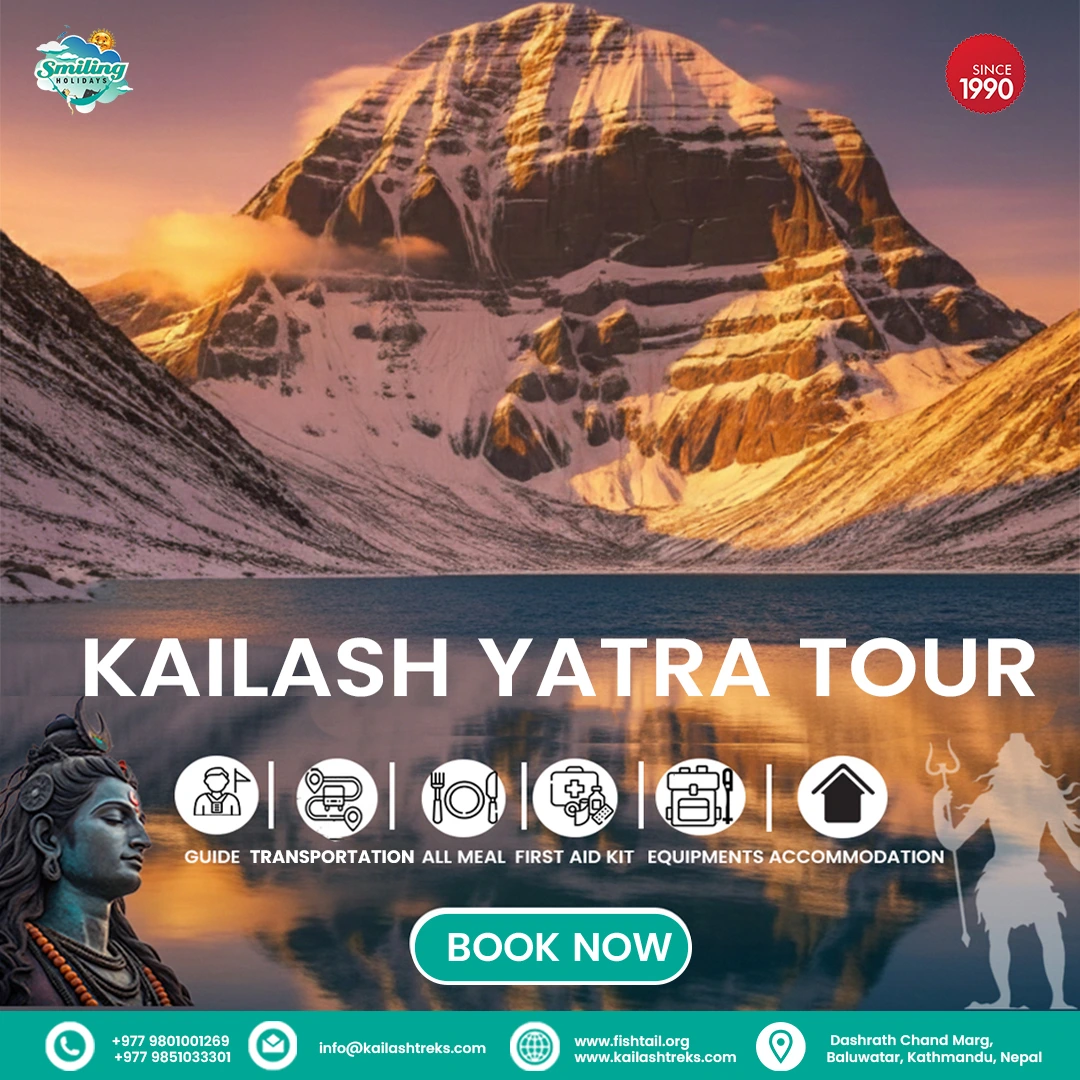
The Ultimate Guide to Kailash Mansarovar Yatra 2026: Registration, Routes, Cost & Everything You Need to Know
Introduction: Why 2026 is the Most Auspicious Year for Your Kailash Yatra Journey
The year 2026 marks a pivotal moment for spiritual seekers and pilgrims worldwide. As the rare Tibetan Year of the Horse, 2026 carries extraordinary spiritual significance—one parikrama (circumambulation) is believed to yield the merit of thirteen ordinary years. Combined with the resumption of the MEA (Ministry of External Affairs) government-sponsored Kailash Mansarovar Yatra after a five-year hiatus, this year presents an unprecedented opportunity for Indians and NRIs to embark on one of the world's most transformative spiritual journeys.
Whether you're a first-time pilgrim or a seasoned trekker, this comprehensive guide covers everything from Kailash Yatra registration 2026 to detailed itineraries, cost breakdowns, and route options. Let's explore what makes Kailash Mansarovar so sacred and how you can join thousands of pilgrims in 2026.
Section 1: Understanding Kailash Mansarovar — The Sacred Significance
Why Kailash Mansarovar Matters to Pilgrims Worldwide
Mount Kailash, known as "Chomolungma" or "Gang Rinpoche" in Tibetan, stands at 6,638 meters (21,778 feet) and is considered the spiritual center of the universe across Hindu, Buddhist, Jain, and Bon religious traditions. Mansarovar Lake, situated at its base, is believed to be the embodiment of purity itself.
The spiritual journey to Kailash encompasses multiple sacred experiences:
Mount Kailash Darshan:
The first glimpse of the snow-capped peak is considered a transformative momentMansarovar Lake holy dip: Bathing in these sacred waters is believed to purify souls and absolve sins
Kailash Parikrama (Kora):
The 52-kilometer circumambulation around Mount Kailash is the core spiritual practice
Dolma La Pass trek
Crossing the 5,645-meter pass represents rebirth and spiritual transformation
Charan Sparsh Kailash
Touching the sacred footprints left by spiritual masters
The Kailash Yatra Horse Year 2026 amplifies these experiences, with the Tibetan astrology calendar designating 2026 as an exceptionally auspicious period for pilgrims
Section 2: Kailash Mansarovar Yatra Registration 2026 — How to Apply
Official MEA Registration Portal
The Government of India's Ministry of External Affairs manages the official Kailash Mansarovar Yatra through a transparent lottery-based system. Here's how to register:
Step-by-Step Registration Process:
1.Visit the Official Portal: Head to kmy.gov.in registration (the exclusive MEA platform)
2.Create Your Account
Register with valid credentials and documents
Fill the Application Form:
Complete the Kailash Yatra MEA apply online form with personal, medical, and passport details
Submit Required Documents:
Birth certificate
Medical fitness certificate
Passport-sized photographs
The Kailash Yatra Lottery System
The Kailash Yatra lottery / lucky draw is how the MEA allocates limited seats among thousands of applicants. Key details:
- Selection Process: Random computerized draw ensures fairness
- Success Rate: Historically, only 2,000–4,000 pilgrims are selected annually
- Notification: Selected candidates are informed via email and SMS
- Confirmation Deadline: Must confirm within the specified timeframe or lose your spot
MEA Government Route vs. Private Operators
Many pilgrims compare private vs government route options. Here's the breakdown:
|
Aspect |
MEA Government Route |
Private Operators (Nepal-based) |
|
Cost |
₹1.5–2 lakhs |
₹2.5–4 lakhs |
|
Flexibility |
Fixed itinerary |
Customizable |
|
Group Size |
50–100+ pilgrims |
Smaller, intimate groups |
|
Permits |
Handled by MEA |
Operator responsibility |
|
Language Support |
Hindi/English guides |
Multi-language guides |
|
Luxury |
Basic but comfortable |
Premium options available |
|
Duration |
20–24 days |
18–28 days |
Private operators like Kailashtreks offer flexibility but at a premium. The MEA route provides affordability and official backing, making it ideal for first-time pilgrims.
Section 3: Kailash Mansarovar Yatra Cost & Packages 2026
Detailed Cost Breakdown
Kailash Yatra Package from Lucknow (MEA Route)
- Base Package Cost: ₹1,50,000–₹1,80,000 per person
- Includes: Flights (Delhi to Lucknow to Lhasa), accommodation, meals, guides, permits
- Excludes: Personal expenses, tips, travel insurance
Kailash Yatra Package from Kathmandu (Private Routes):
- Standard Package: ₹2,80,000 per person
- Premium Package: ₹5,50,000 per person
- Includes: All permits, accommodation, meals, guides, support staff
- Excludes: International flights, travel insurance
Kailash Yatra Helicopter Package:
- Helicopter Darshan: ₹1,80,000–₹2,50,000
- Duration: 13–14 days
- Includes: Aerial Darshan of Mount Kailash, Mansarovar Lake viewing
- Ideal for: Elderly pilgrims, those with limited time, altitude-sensitive individuals
Kailash Yatra by Flight (Complete Expedition):
- Flight Route via Lhasa: ₹2,00,000–₹4,00,000
- Duration: 15–18 days
- Advantage: Gradual acclimatization, comfortable accommodation
Kailash Yatra NRI Packages:
For pilgrims from USA, UK, Australia, and Canada, pricing is quoted in USD:
- USA/Canada: $2,500–$4,000 per person
- UK/Europe: £2,000–£3,200 per person
- Australia/New Zealand: AUD $4,500–$6,500 per person
- Includes: Tibet permit, China group visa facilitation, English-speaking guides
What's Included in Standard Packages:
✓ Pre-yatra medical fitness certificate
✓ Accommodation (hotels/guesthouses/monasteries)
✓ All meals (breakfast, lunch, dinner)
✓ Professional guides and support staff
✓ Transportation within Tibet
✓ Permits (Tibet Travel Permit, China group visa)
✓ Basic first-aid and oxygen
What's NOT Included:
✗ International airfare from your country
✗ Domestic flights within India
✗ Travel insurance (strongly recommended)
✗ Personal medications
✗ Gratuities and tips
✗ Souvenirs and personal shopping
Section 4: Kailash Mansarovar Yatra Routes — Choosing Your Path
Route 1: Kailash Mansarovar Yatra via Lipulekh Pass (Most Popular)
Duration: 20–24 days
Difficulty: Moderate to Challenging
Best Season: May to September
Itinerary Overview:
|
Day |
Location |
Altitude |
Activity |
|
1–2 |
Delhi to Kathmandu |
1,400m |
Acclimatization, permits |
|
3–4 |
Kathmandu to Nepalgunj |
700m |
Final preparations |
|
5–7 |
Nepalgunj to Simikot |
2,600m |
Trek to remote base camp |
|
8–11 |
Simikot to Lipulekh Pass |
3,600m |
High-altitude acclimatization |
|
12–15 |
Lipulekh to Darshan Point |
4,600m |
Mount Kailash Darshan |
|
16–17 |
Mansarovar Lake |
4,590m |
Holy dip and circumambulation |
|
18–20 |
Kailash Parikrama / Kora |
4,600–5,645m |
52-km circumambulation |
|
21–24 |
Return journey |
Variable |
Descent and return flights |
Key Highlights
- Crosses into Tibet via the remote Lipulekh Pass (Indo-Tibet border)
- Includes full Kailash Parikrama (52-km circumambulation)
- Passes through Dolma La Pass (5,645m)—the spiritual pinnacle
Mansarovar Lake holy dip
Route 2: Kailash Yatra via Nathu La (Sikkim Route)
Duration: 18–22 days
Difficulty: Moderate
Best Season: May to October
Why Choose This Route?
- Less crowded than the Lipulekh route
- Better road connectivity from Sikkim
- Easier for elderly pilgrims
Itinerary: Delhi → Kolkata → Gangtok (Sikkim) → Nathu La Pass → Tibet → Kailash → Return
Route 3: Kailash Yatra from Nepal / Kathmandu (Overland)
Duration: 16–20 days
Difficulty: Moderate
Best Season: May to September
This route starts directly from Kathmandu, making it convenient for those already in Nepal or traveling from neighboring countries.
Key Advantages:
- No international flight to Delhi required
- Direct access to Kailashtreks and private operators
- Flexible start dates
- Customizable itineraries
Starting Points:
Kailash Yatra from Kathmandu:
Standard route via Nepalgunj
Kailash Yatra from Nepalgunj
Jump-off point for treks to Simikot
Kailash Yatra from Simikot
High-altitude base camp (2,600m)
Kailash Yatra from Hilsa.
Recently opened border village in Nepal
Route 4: Kailash Yatra Lhasa Route (The Comfort Option)
Duration: 12–15 days
Difficulty: Easy
Best Season: April to October
Itinerary: Delhi/Kathmandu → Flight to Lhasa → Kailash Yatra by flight to Nagchu → Mount Kailash Darshan → Mansarovar → Return
Why Choose This
- Minimal trekking (mostly scenic drives)
- Best for those with limited trekking experience
- Excellent for Kailash Yatra for senior citizens (above 60 years)
- Allows gradual acclimatization
Route 5: Shipki La Route — The Emerging Game-Changer (2026)
Status: Under Negotiation with China
Projected Opening: 2026–2027
Advantages: Fastest overland route from India
The Indian government is actively negotiating to open the Shipki La route through Himachal Pradesh. This would revolutionize Kailash Yatra by:
- Reducing travel time from 20+ days to 12–14 days
- Eliminating Nepal transit
- Direct overland access from Himachal Pradesh
- Lower logistical costs
Current Status: While not fully operational in 2026, this emerging Shipki La route — 2026 is a trending search topic among pilgrims planning future journeys.
Section 5: Spiritual Practices During Your Kailash Yatra
The Core Spiritual Rituals
Mount Kailash Darshan
Your first glimpse of the sacred peak is unforgettable. Mount Kailash Darshan typically occurs at:
- Drugye Tso Lake: Initial viewpoint
- Yam Dwar: Northern approach
- Drolma La: Highest point of circumambulation
Kailash Parikrama / Kora (The Sacred Circumambulation)
The Kailash Parikrama, known as Kora in Tibetan, is the spiritual heart of the yatra.
Distance: 52 kilometers
Duration: 3–4 days
Difficulty: High altitude, challenging terrain
Spiritual Merit: Especially potent during the Kailash Yatra Horse Year 2026
Day-by-Day Breakdown
- Day 1: Start from Darshan Point → Dirapuk Monastery (14 km)
- Day 2: Dirapuk → Dolma La Pass → Zuthulpuk Monastery (20 km, most challenging)
- Day 3: Zuthulpuk → Gyanaphuk Monastery (18 km)
Mansarovar Lake Holy Dip
Mansarovar Lake (4,590m) is the world's highest freshwater lake with profound spiritual significance.
- Temperature: Freezes in winter; brief bathing possible May–September
- Spiritual Benefit: Believed to absolve sins of many lifetimes
- Cultural Significance: Mentioned in Hindu texts as the birthplace of sacred waters
Dolma La Pass Trek
At 5,645 meters, Dolma La Pass represents the physical and spiritual pinnacle of your yatra.
- Spiritual Belief: Passing through represents death and rebirth
- Prayer Flags: Thousands flutter at the summit, blessing pilgrims
- Time to Cross: 4–5 hours from lower camp
- Psychological Milestone: Many report profound emotional experiences
Charan Sparsh Kailash
Charan Sparsh means "touching the sacred footprints." Located near Zuthulpuk monastery, these impressions in rock are believed to be the footprints of spiritual masters.
Kailash Aerial Darshan (Helicopter Option for 2026)
For pilgrims unable to complete the full circumambulation, Kailash Aerial Darshan offers:
- 360-degree aerial views of Mount Kailash
- Flyover of Mansarovar Lake
- Viewing without trekking challenges
- Growing popularity among elderly pilgrims in 2026
Section 6: Eligibility, Age Limits & Medical Requirements
Kailash Mansarovar Yatra Eligibility Criteria
To participate in the official MEA yatra, you must meet specific requirements:
Age Requirements:
- Minimum Age: 18 years
- Maximum Age: 70 years (with medical clearance)
- Special Consideration: Kailash Yatra for senior citizens above 60 years can participate with additional medical tests
Kailash Yatra Age Limit — Understanding Restrictions
Why the 70-Year Upper Limit?
- High altitude (up to 5,645m) strains cardiovascular systems
- Limited medical facilities in remote areas
- Physical endurance requirements for 52-km circumambulation
For Those Above 70 Years
- Private operators accept older pilgrims with rigorous medical clearance
- Kailash Yatra helicopter package is ideal for elderly pilgrims
- Shorter routes (Lhasa-based) with minimal trekking available
Kailash Yatra BMI Requirement & Medical Fitness
BMI Guidelines:
- Ideal BMI: 18.5–29.9
- Acceptable Range: Up to 35 (with doctor's approval)
- Higher BMI: May require additional fitness assessment
Kailash Mansarovar Medical Test Requirements:
All pilgrims must submit a Kailash Yatra medical test report including:
Cardiovascular Assessment:
Blood pressure (normal: <140/90)
o ECG (electrocardiogram) for those above 45 years
o Stress test for high-risk individualsRespiratory Function
· Lung capacity tests
o History of asthma/COPD screening
Blood Work
o Hemoglobin level (altitude sickness prevention)
o Blood sugar (diabetes management)
o Thyroid function
o Kidney function tests
o Doctor must certify fitness for high-altitude trekking
o Medical Certificate valid for 6 months
Critical Health Conditions (Disqualifying):
- Uncontrolled hypertension
- Recent heart attack or stroke
- Severe lung disease (COPD, asthma requiring constant medication)
- Uncontrolled diabetes
- Pregnancy (any trimester)
- Severe obesity (BMI >40 without exemption)
Kailash Yatra Documents Required
Prepare these documents for registration:
✓ Passport (valid for 6+ months beyond yatra)
✓ Birth Certificate (for age verification)
✓ Medical Fitness Certificate (issued within 3 months)
✓ Recent Passport-Sized Photographs (4x6 cm, colored)
✓ Blood Report (hemoglobin level, blood group)
✓ Insurance Document (recommended)
✓ Vaccination Certificate (if required by China)
✓ Emergency Contact Details (2–3 family members)
✓ Consent Form (acknowledging physical risks)
Section 7: Permits, Visas & Travel Documentation
Tibet Travel Permit for Kailash<
Non-Chinese nationals require a Tibet Travel Permit to enter Tibet Autonomous Region.
Who Issues the Permit?
- For MEA Yatra: Ministry of External Affairs, Government of India
- For Private Operators: Handled by trekking companies (Kailashtreks, etc.)
Timeline:
- Application Processing: 15–20 days
- Approval Duration: Valid for 30 days
- Cost: Included in MEA package; ₹5,000–₹15,000 additional for private routes
China Group Visa for Kailash Yatra
All Indian nationals require a China group visa to traverse Tibet.
Key Details:
- Visa Type: L-type (tourist)
- Duration: Usually 30 days
- Processing: 10–15 days
- Cost: ₹1,500–₹3,000 (often included in package)
- Group Requirement: Minimum 5 persons required for group visa
Passport Required for Kailash Yatra — Common Confusion
Yes, you absolutely need a passport for the Kailash Yatra. Many users search "passport required for Kailash Yatra" due to confusion about domestic Indian travel regulations.
Why a Passport is Essential
- You're crossing into a foreign country (Tibet, China)
- International borders require sovereign travel documentation
- Chinese authorities verify passports at entry/exit points
- No domestic ID (Aadhar, voter ID) suffices
Passport Validity Requirements:
- Must be valid for at least 6 months beyond yatra completion
- Minimum of 2 blank pages for visa stamps
- Biometric Indian passport required (not old machine-readable passports)
Kailash Yatra Permit Process India
The MEA manages India's side of permit issuance:
Step 1: Submit application via kmy.gov.in registration
Step 2: MEA verifies documents (5–7 days)
Step 3: China liaison approval (7–10 days)
Step 4: Permit printing and dispatch (2–3 days)
Step 5: Receive permits via registered mail
Total Timeline: 3–4 weeks from application submission
Section 8: When to Go — Best Time & 2026 Seasonal Guide
Kailash Mansarovar Yatra Best Time to Visit
Official Season: May to September (5-month window)
Why This Window?
- Roads accessible after winter snow melt
- Weather relatively stable
- Temperature ranges: 5°C to 15°C during day; -5°C to 0°C at night
- Probability of clear skies for Darshan: 70–80%
Detailed Monthly Breakdown:
May (Opening Month)
- Weather: Clear, mild days; cold nights
- Crowds: Moderate
- Advantages: Fresh snow on peaks; fewer pilgrims
- Challenges: Roads may have patches of ice
June–July (Peak Season)
- Weather: Warmest month; occasional afternoon rains
- Crowds: Maximum (10,000+ pilgrims)
- Advantages: All facilities operational; warm days
- Challenges: Long queues; less solitude; higher prices
August–September (Second Peak)
- Weather: Warm but increasingly unstable; monsoon rains possible
- Crowds: Moderate to heavy
- Advantages: Still warm; slightly fewer pilgrims than July
- Challenges: Flash floods risk on lower sections
October (Closing Month)
- Weather: Cool but clear; first snow on higher passes
- Crowds: Low
- Advantages: Fewer pilgrims; exceptional clarity for Darshan
- Challenges: Freezing nights; roads closing soon; limited facilities
Kailash Yatra Season May to September — What Happens Outside?
Outside This Window (October–April):
- Roads blocked by snow
- Temperature drops to -20°C or lower
- Yatra operations completely suspended
- Monasteries partially closed
- Only helicopter aerial darshanare possible
Kailash Yatra Full Moon Dates 2026
The full moon (Purnima) carries special spiritual significance:
- Saga Dawa Festival Kailash (Buddha's Birthday): May 13, 2026
- Celebrates Buddha's enlightenment
- Massive influx of Buddhist pilgrims
- Largest spiritual gathering of the year
- Best day for Kailash Yatra in 2026
Other Full Moon Dates in Season
- June 11, 2026
- July 10, 2026
- August 9, 2026
- September 7, 2026
Kailash Yatra 2026 Dates / Batches
The MEA typically organizes yatra in multiple batches:
Expected 2026 Batches (Tentative):
|
Batch |
Departure |
Duration |
Theme |
|
Batch 1 |
May 1–20 |
22 days |
Saga Dawa Festival |
|
Batch 2 |
May 15–June 10 |
20 days |
Early summer |
|
Batch 3 |
June 15–July 5 |
18 days |
Peak season |
|
Batch 4 |
July 10–August 10 |
20 days |
Mid-summer |
|
Batch 5 |
August 15–September 15 |
20 days |
Late summer |
|
Batch 6 |
September 1–30 |
22 days |
Autumn |
Selection: Batches filled via lottery system; preferences noted but not guaranteed
Section 9: Practical Travel & Trekking Information
Kailash Mansarovar Trek Distance & Terrain
Total Trek Overview:
- Total Distance Covered: 200+ kilometers (including road/flight + trekking)
- Pure Trekking Distance: 52 km (Kailash Parikrama/Kora alone)
- Elevation Range: 700m (Kathmandu) to 5,645m (Dolma La Pass)
- Net Elevation Gain: 4,945 meters
Kailash Mansarovar Trek Distance — Day-by-Day Breakdown:
|
Segment |
Distance |
Altitude |
Difficulty |
|
Kathmandu to Nepalgunj |
500 km (fly) |
700m |
Easy |
|
Nepalgunj to Simikot |
250 km (fly) |
2,600m |
Moderate |
|
Simikot to Hilsa |
60 km (trek) |
2,600–2,900m |
Moderate |
|
Hilsa to Lipulekh |
45 km (trek) |
2,900–3,600m |
Moderate to Hard |
|
Lipulekh to Kailash |
80 km (trek/drive) |
3,600–4,600m |
Hard |
|
Kailash Parikrama |
52 km (trek) |
4,600–5,645m |
Very Hard |
Kailash Yatra Itinerary — Complete Day-by-Day Guide
Days 1–2: Preparation (Delhi/Kathmandu)
- Medical check-ups
- Permit verification
- Hotel accommodation in Delhi or Kathmandu
- Permit briefing and insurance finalization
Days 3–4: Kathmandu Acclimatization & Puja
- Explore Kathmandu temples
- Purchase last-minute supplies
- Perform Puja (religious ceremony) seeking blessings
Days 5–7: Nepalgunj to Simikot
- Domestic flight to Nepalgunj (short hop from Kathmandu)
- Final provisions shopping
- Flight to Simikot (2,600m)
- First altitude acclimatization
- Rest and preparation for high-altitude trek
Days 8–11: Simikot to Lipulekh Pass
- Trek through remote Humla District
- Stay in basic village accommodations
- Gradual altitude increase
- Reach Lipulekh Pass (3,600m) — Indo-Tibet border
Days 12–14: Lipulekh to Kailash Darshan Point
- Cross into Tibet Autonomous Region
- Multiple overnight camps in high altitude
- Approach Mount Kailash viewpoint
- First Mount Kailash Darshan (emotional peak)
Days 15–17: Mansarovar Lake & Initial Circumambulation
- Mansarovar Lake holy dip (weather permitting)
- Rest and spiritual practices
- Begin final acclimatization for Dolma La
Days 18–20: The Sacred Kailash Parikrama (Kora)<
- Day 1 of Kora: Start → Dirapuk Monastery (14 km)
- Day 2 of Kora: Dirapuk → Dolma La Pass → Zuthulpuk (20 km—most challenging)
- Day 3 of Kora: Zuthulpuk → Gyanaphuk Monastery (18 km)
Days 21–24: Return Journey
- Descend to Lipulekh
- Trek back toward Hilsa
- Flight from Simikot to Kathmandu/Nepalgunj
- Final night in Kathmandu
- Return flights to Delhi/home
Total Duration: 20–24 days
Accommodation During Kailash Yatra
Quality varies based on route and operator:
Kathmandu & Nepalgunj
- Category: 3-star hotels
- Facilities: Private bathrooms, hot water, WiFi
- Cost: Included in package
Simikot
- Category: Basic guesthouses
- Facilities: Shared bathrooms, limited hot water
- Cost: Included in package
High-Altitude Camps (Hilsa onwards)
- Accommodation: Tented camps, basic monasteries
- Bedding: Sleeping bags required (often provided)
- Facilities: Minimal (basic toilets, cold water)
- Heating: Wood/yak dung stoves
Monasteries (Dirapuk, Zuthulpuk)
- Accommodation: Dormitory-style rooms
- Bedding: Basic mattresses, bring your own sleeping bag
- Facilities: Very basic
- Experience: Authentic spiritual immersion
Tip: Don't expect luxury; comfort is secondary to spiritual experience.
Altitude Sickness During Kailash Yatra — Prevention & Management
Altitude sickness is the primary health challenge, with symptoms affecting 40–60% of pilgrims.
Understanding Acute Mountain Sickness (AMS):
Mild Symptoms
- Headache
- Fatigue
- Nausea
- Shortness of breath at rest
- Insomnia
Moderate Symptoms
- Severe headache
- Vomiting
- Confusion
- Difficulty walking
Severe Symptoms
- High Altitude Cerebral Edema (HACE)
- High Altitude Pulmonary Edema (HAPE)
- Medical evacuation required
Revention Strategies:
Gradual Acclimatization
o Allow 2–3 days at intermediate altitudes (2,600–3,600m)
o Don't ascend >500m per day above 3,000m
o "Climb high, sleep low" principle
Hydration
o Drink 3–4 liters of water daily
o Avoid alcohol and caffeine
o Herbal tea with honey recommended
Medication
o Diamox (Acetazolamide): 125mg twice daily, starting 24 hours before altitude gain
o Ibuprofen: For altitude headaches
o Ginger supplements: Natural remedy for nausea
Physical Preparation
o 3–6 months cardio training before yatra
o Regular trekking practice at moderate altitudes
o Build cardiovascular fitness gradually
On-Site Management
o Inform guides immediately of symptoms
o Rest at current altitude for 24 hours
o Descend if symptoms worsen
o Oxygen available at base camps
Warning Signs Requiring Immediate Medical Attention:
- Persistent vomiting (unable to keep fluids down)
- Severe confusion or difficulty speaking
- Extreme breathlessness at rest
- Blue lips or fingernails
- Inability to walk straight
Kailash Yatra Packing List / Gear Essentials
Packing correctly determines your comfort and safety. Here's the comprehensive list:
Clothing (High-Altitude-Specific):
- Thermal inner wear (merino wool, 2 sets)
- Fleece jacket (lightweight, packable)
- Down jacket (critical for nights)
- Waterproof rain jacket (monsoon protection)
- Hiking pants (quick-dry, 2 pairs)
- Wool socks (thick, 5–6 pairs)
- Trekking boots (broken-in, waterproof)
- Camp shoes/slippers (lighter weight)
- Wool hat and balaclava (critical)
- Gloves (thermal, 2 pairs)
- Scarf/neck gaiter
- Sunglasses (UV protection, critical at altitude)
- Swimming costume (for Mansarovar holy dip)
Backpack & Bags:
- Main trekking backpack (50–60L, proper weight distribution)
- Smaller daypack (20L, for daily treks)
- Dry bags (waterproofing critical)
- Stuff sacks (organize items by weight)
Altitude & Health Gear:
Personal first-aid kit
- Pain relievers (ibuprofen, paracetamol)
- Anti-diarrhea medicine (Imodium)
- Antacid (for altitude stomach issues)
- Antihistamine (allergies)
- Blister treatment
- Antiseptic cream
- Bandages and tape
- Diamox (if prescribed)
- Personal medications
- Pulse oximeter (monitors oxygen levels)
- Thermometer
- Altitude sickness supplements (ginger, Ginkgo biloba)
- Sunscreen (SPF 50+, critical at altitude)
- Lip balm with SPF
Sleeping & Shelter:
- Sleeping bag (-10°C rating minimum)
- Sleeping pad (insulation essential)
- Pillow (lightweight, inflatable)
- Thermal underwear for sleeping
Trekking Essentials:
- Trekking poles (essential for knees, especially on descent)
- Gaiters (protect boots from mud/snow)
- Hydration bladder / water bottles (3-liter capacity)
- Insulated bottle (keep water from freezing)
- Headlamp (LED with extra batteries)
- Multi-tool or knife
- Toilet paper and trowel (no toilets in high-altitude camps)
- Biodegradable soap and towel
Navigation & Safety:
Map of the region
- Compass
- GPS device (optional, as guides lead the way)
- Whistle (emergency communication)
- Mirror (signaling device)
- Rope/cord (emergency use)
Documentation & Money:
- Passport and copies (keep originals safe)
- Permit copies
- Travel insurance document
- Emergency contact card
- Chinese currency (Yuan/RMB)
- Indian rupees (for Nepal portions)
- Credit/debit cards
- Traveler's checks (backup)
Personal Hygiene & Comfort:
- Wet wipes (hand sanitizer wipes)
- Biodegradable toilet paper
- Toothbrush and toothpaste
- Feminine hygiene products (if applicable)
- Deodorant
- Dry shampoo
- Moisturizing lotion (altitude = dry skin)
- Earplugs (shared accommodations)
- Notebook and pen (spiritual journaling)
Electronics:
- Phone with offline maps (download before trip)
- Chargers and power banks (limited electricity)
- Camera (spare memory cards, batteries)
- Portable external hard drive (backup photos)
Pro Tip: Limit baggage to 15 kg checked luggage + 5 kg carry-on. Most items are provided by tour operators; confirm before packing.
Mobile Network & Connectivity at Kailash
Connectivity Reality: Extremely limited.
Signal Availability:
- Kathmandu: Full 4G/WiFi
- Nepalgunj: 3G/2G, intermittent
- Simikot: 2G only, very weak
- High-Altitude Camps (above 3,600m): Zero connectivity
- Mansarovar/Kailash: No signal whatsoever
Workarounds:
Download Offline Maps
o Google Maps offline (covers trekking routes)
o Maps.me (alternative with altitude data)
Communication with Family
o Schedule check-ins at Simikot/Nepalgunj before heading to mountains
o Use satellite messenger (Garmin inReach) for emergency contact
o Hotel in Kathmandu can relay urgent messages
Photography
o Bring extra memory cards (no backup internet)
o Store photos in multiple physical drives
o Portable solar chargers for extended battery life
Prepare Mentally
o This digital detox is part of the spiritual journey
o Many pilgrims report it as a profound benefit
o Embracing disconnection enhances the pilgrimage experience
Travel Insurance for Kailash Yatra
Travel insurance is absolutely critical and highly recommended.
What Standard Travel Insurance Covers:
✓ Trip cancellation
✓ Emergency medical evacuation
✓ Medical expenses up to specified limit
✓ Hospitalization
✓ Lost baggage/documents
✓ Flight delays/cancellations
✓ Personal accident
What It Often DOESN'T Cover:
✗ Pre-existing medical conditions
✗ High-altitude illness (unless specific rider purchased)
✗ Adventure sports (if yatra classified as such)
✗ Trips booked after diagnosis
✗ Travel against government warnings
Recommended Coverage:
- Medical Evacuation: Minimum $200,000 (helicopter evacuation costs $20,000–$50,000)
- Medical Expenses: Minimum $100,000
- Altitude Sickness Rider: Essential (ask specifically)
- Duration: 25–28 days minimum
Recommended Insurance Providers:
- HDFC Ergo (India-specific, altitude coverage)
- ICICI Lombard (good altitude sickness rider)
- Goibibo Insurance (budget-friendly, trekking coverage)
- World Nomads (international travelers, adventure coverage)
- AXA (premium option, excellent evacuation coverage)
Cost: ₹3,000–₹8,000 for full 25-day coverage
Section 10: Why 2026 is Extraordinary — The Year of the Horse
The Tibetan Year of the Horse & Spiritual Significance
2026 holds unprecedented spiritual importance in Tibetan Buddhism and Hinduism. Here's why pilgrims worldwide are searching "Kailash Horse Year 2026" and "Mahakumbh of Kailash":
Tibetan Astrological Significance:
In Tibetan Buddhism, the 12-year cycle follows animal symbols, with each year carrying unique cosmic energy:
|
Year |
Animal |
Element |
Pilgrimage Merit |
|
2024 |
Monkey |
Wood |
Normal |
|
2025 |
Bird |
Fire |
Enhanced |
|
2026 |
Horse |
Fire |
13x Multiplied |
|
2027 |
Sheep |
Fire |
Normal |
The Magic of 2026:
- One parikrama = 13 ordinary parikramas: The spiritual merit of a single circumambulation during the Horse Year is believed equivalent to 13 circumambulations in regular years
- Rare Occurrence: The Year of the Horse comes once every 12 years; 2026 is particularly auspicious
- Global Recognition: Both Tibetan Buddhist and Hindu traditions acknowledge this enhanced merit
Historical Precedent:
The last significant "Kailash Yatra Horse Year" was 2014, which saw unprecedented pilgrim numbers. Experts predict 2026 will far exceed that, with potentially 10,000+ seekers from around the world.
The MEA Yatra Resumption After 5-Year Hiatus
The Ministry of External Affairs suspended official Kailash yatra from 2020–2025 due to:
- COVID-19 pandemic
- Sino-Indian border tensions
- Infrastructure maintenance and reorganization
2026 marks the grand resumption, coinciding perfectly with the auspicious Horse Year. This convergence is why "Kailash Mansarovar Yatra 2026 registration open" is among the top trending searches.
The Pilgrim Surge Forecast for 2026
Industry analysts predict:
|
Category |
2025 (Est.) |
2026 (Projected) |
Growth |
|
MEA Government Pilgrims |
0 (no yatra) |
3,000–4,000 |
∞ |
|
Private Operator Pilgrims |
2,000 |
4,000–5,000 |
+150% |
|
NRI Pilgrims |
500 |
1,500–2,000 |
+200% |
|
Total |
2,500 |
8,500–11,000 |
+340% |
This Year's Trending Searches Explained:
- "Kailash Mansarovar Yatra 2026 registration open": Highest search volume; people rushing to register
- "Kailash Horse Year 2026": Seeking understanding of spiritual significance
- "Shipki La route Kailash 2026": Interest in emerging faster route
- "Kailash Yatra for Indians 2026": Domestic demand surge
- "Kailash Aerial Darshan 2026": Those unable to trek seeking alternatives
Section 11: Frequently Asked Questions (FAQs)
Registration & Eligibility:
Q1: When does Kailash Mansarovar Yatra 2026 registration open?
A: The MEA typically announces registration windows 4–6 months before yatra batches. Expected announcement: December 2025 / January 2026 for first batches. First registrations open mid-January 2026 for May–June yatra.
Q2: What are the chances of winning the Kailash Yatra lottery?
A: Selection rate is approximately 10–20%, meaning 1 in 5 to 1 in 10 applicants are selected. With thousands applying, persistence matters; reapply if unsuccessful.
Q3: Can I apply for the MEA yatra if I'm above 70 years old?
A: The MEA hard limit is 70 years. Those above 70 must explore private operators offering flexible age limits with rigorous medical clearance.
Q4: Do I need a passport for Kailash Yatra if I only have Aadhaar?
A: Yes, passport is mandatory. No alternative domestic ID is accepted for international travel to Tibet/China.
Health & Medical:
Q5: Can I do Kailash Yatra with asthma?
A: Mild, controlled asthma with inhalers is usually acceptable with doctor's clearance. Severe or steroid-dependent asthma may be disqualifying. Always disclose and get medical certification.
Q6: What if I'm diabetic? Can I still go?
A: Well-controlled Type 2 diabetes is usually acceptable with:
- Recent blood sugar reports
- Doctor's fitness certification
- Insulin/medications properly stored
- Blood testing equipment brought along
Uncontrolled diabetes is disqualifying.
Q7: How do I prevent altitude sickness?
A: Three weeks before departure, consult your doctor about Diamox prescription. During yatra: gradual acclimatization, hydration, avoiding alcohol, rest days at intermediate altitudes.
Cost & Financing:
Q8: Can I pay the Kailash Yatra cost in installments?
A: MEA doesn't offer installments; full payment typically required 30 days before yatra. Private operators may offer payment plans; negotiate with specific tour company.
Q9: Is travel insurance included in the package price?
A: Usually not. Budget ₹3,000–₹8,000 additionally for comprehensive 25-day coverage.
Q10: Are meals included in Kailash Yatra packages?
A: Yes, all packages include meals. Quality varies; high-altitude camps offer simple but nutritious food. Dietary restrictions should be communicated in advance.
Practical Travel:
Q11: Can I use my Indian SIM on the Kailash Yatra?
A: Indian network doesn't work in Tibet. Purchase a Chinese SIM in Lhasa if needed, but connectivity remains extremely limited at high altitudes. Expect zero signal above 3,600m.
Q12: What's the best time to do Kailash Yatra for clear weather?
A: September typically offers the clearest skies (least cloud cover) with fewer monsoon disruptions. May during Saga Dawa is spiritually significant but cloudier.
Q13: Can pregnant women do Kailash Yatra?
A: Pregnancy of any trimester is disqualifying due to altitude risks, physical exertion, and limited medical facilities.
Section 12: Essential Travel Tips & Success Hacks
Pre-Yatra Preparation (3–6 Months Before):
Start Cardio Training NOW
o Run/walk 5 km, 3–4 times per week
o Stairclimbing, elliptical machines
o Cycling to build leg strength
Get Medical Tests Done Early
Allows time for additional tests if needed
o Identify any underlying issues pre-trip
Break-In Trekking Boots
o Wear on daily walks for 4–6 weeks
o Prevents painful blisters during yatra
Learn Basic Tibetan & Mandarin
o "Tashi Delek" (Tibetan hello)
o "Namaste" (universal across Nepal/Tibet)
o Numbers 1–10 for basic transactions
Research & Choose Your Route
o MEA yatra? Private from Nepal? Lhasa-based?
o Decision affects costs, dates, experience
During the Yatra:
First Day Rule
o Do minimal activity on day of arrival
o Let body acclimatize even at moderate altitudes
The "Climb High, Sleep Low" Principle
o Ascend during day to higher elevation
o Sleep at lower elevation for recovery
o Implemented on organized yatra; guides follow this
Hydration Over Everything
o Drink until urine is clear
o Most pilgrims severely under-hydrate; avoid this
Befriend Your Guide
o They're invaluable for cultural insights
o Tipping well (₹500–₹1,000 at trip end) earns special care
Respect Local Customs
o Walk clockwise around temples (respect Buddhist convention)
o Don't photograph people without permission
o Remove shoes when entering monasteries
o Don't point at sacred objects
Document the Experience
o Write daily in a journal
o Take photos liberally (memories fade fast at altitude)
o Capture emotions, not just landscapes
Embrace the Hardship
o Physical discomfort is part of spiritual transformation
o Cold nights, simple food, no showers become cherished memories
o Surrender to the experience rather than resist
Post-Yatra Integration:
Rest for 3–5 Days
o Sleep more than usual
o Eat nutritious food (your body is depleted)
o Avoid strenuous activity
Journal Reflections
o Write insights while memories are fresh
o These become treasured keepsakes
Share Stories Thoughtfully
o Spiritual experiences can't be fully conveyed in words
o Share with those genuinely interested
o Let others have their own experience without preconditioning
Conclusion: Your Kailash Mansarovar Yatra Awaits in 2026
The convergence of multiple factors makes 2026 an unprecedented year for Kailash Mansarovar Yatra:
✓ MEA yatra resumption after 5-year hiatus
✓ Rare Tibetan Year of the Horse
✓ Spiritual merit multiplied 13-fold
✓ Emerging Shipki La route negotiations
✓ Global accessibility through helicopter options
Whether you're drawn by Mount Kailash Darshan, the transformative Kailash Parikrama, the sacred Mansarovar Lake holy dip, or the spiritual significance of Charan Sparsh Kailash, 2026 offers an opportunity that aligns with both practical accessibility and cosmic spirituality.
Your Next Steps:
1. Assess Your Fitness: Begin cardiovascular training immediately
2. Complete Medical Tests: Schedule early for any needed follow-ups
3. Monitor Registration Dates: Set alerts for kmy.gov.in registration opening (expected December 2025)
4. Decide Your Route: MEA lottery, private from Nepal, or Lhasa-based?
5. Book Travel Insurance: Cover altitude sickness and medical evacuation specifically
6. Join Online Communities: Connect with other pilgrims planning 2026 yatra for advice and camaraderie
The Spiritual Dimension:
Beyond logistics and planning, remember why you're drawn to Kailash. This sacred journey represents:
- Spiritual Awakening: The chance to understand your deepest beliefs
- Physical Challenge: Overcoming limitations reveals inner strength
- Collective Experience: Walking with thousands of pilgrims toward a shared sacred goal
- Cosmic Alignment: Participating in an auspicious moment in the universe's cycles
Mount Kailash has called seekers for millennia. In 2026, during the Year of the Horse, that call echoes louder than ever.