
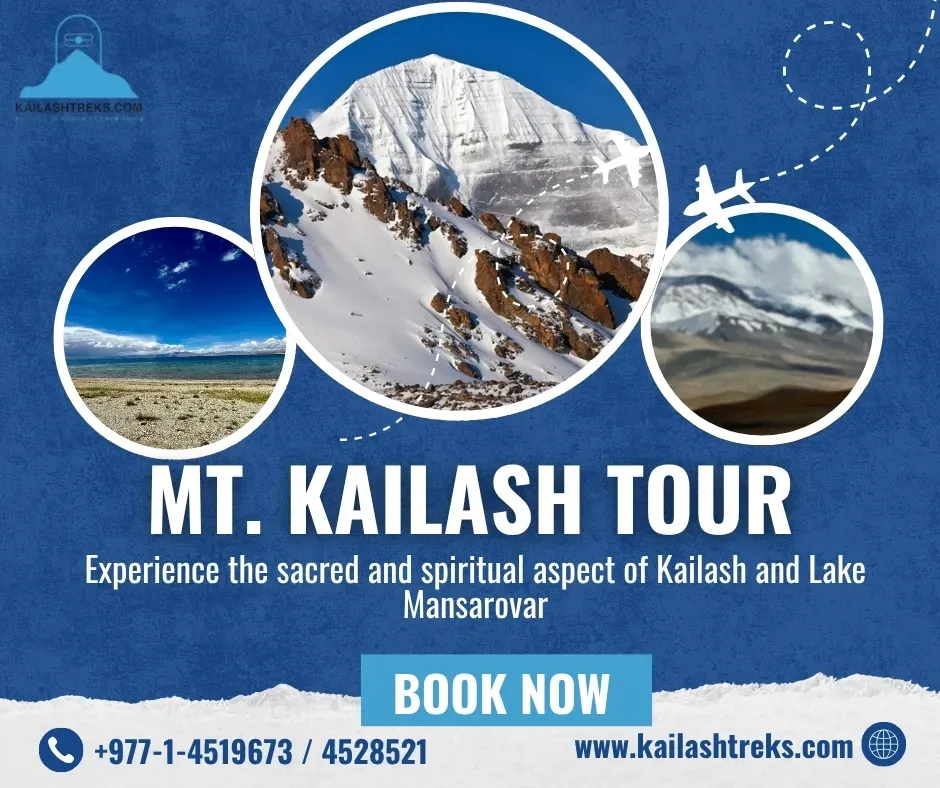
Kailash Mansarovar Yatra 2026: The Ultimate Pilgrim's Guide
The Kailash Mansarovar Yatra 2026 is not merely a trek; it is the ultimate test of faith and endurance. Known as the "Stairway to Heaven," Mount Kailash stands at 6,638 meters in the remote Ngari Prefecture of Tibet, revered as the axis of the universe by Hindus, Buddhists, Jains, and Bonpos.
For thousands of pilgrims, the journey to the Kailash Mansarovar yatra 2026 is a lifelong dream. However, the logistics of traveling to this restricted region of Tibet have changed significantly for the upcoming season.
This comprehensive guide covers everything you need to know for a successful pilgrimage in 2026, from the new visa rules to the challenging trek over Dolma La Pass.
Kailash Mansarovar Yatra 2026 Update: Critical Changes to Visa & Permits
Before you pack your bags, you must understand the new regulatory landscape. The Chinese authorities have updated the visa policy for the Kailash Mansarovar Yatra, specifically for Indian pilgrims and NRIs traveling via Nepal.
1. Longer Processing Times in Kathmandu
Unlike previous years, where a 3-day stopover was sufficient, the Group Visa for Tibet now requires a minimum of 6 working days for processing in Kathmandu.
- Requirement: You must be physically present in Kathmandu.
- Process: Your original passport is submitted to the Chinese Embassy for biometrics.
- Impact: Your itinerary must now include 3–4 extra nights in Nepal before crossing the border.
Mandatory Group Rules for NRIs
If you are an NRI (Non-Resident Indian) or hold a foreign passport, you can no longer travel solo or in small private groups of two or three.
- The Rule: NRIs must form a group of at least 5 members.
- The Solution: If you are traveling alone, we can map you into an existing group to meet this requirement.
Choosing Your Route: Overland vs. Helicopter
Selecting the right route is the most critical decision you will make. While the destination is the same, the experience varies drastically depending on your mode of transport.
Option 1: The Overland Route via Kyirong (Most Popular)
This is the classic pilgrimage route. It is cost-effective and offers better acclimatization, which is crucial for the high altitude Parikrama(circumambulation)
- Route: Kathmandu → Syabrubesi → Kyirong (Border) → Saga → Lake Mansarovar.
- Duration: 14–16 Days.
- Best For: Pilgrims who want the full scenic experience and better altitude adaptation.
Option 2: The Helicopter Route via Simikot (Time-Saver)
This route is often preferred by elderly pilgrims or those with limited time. It skips the long, bumpy drives of the Nepal side but requires multiple flights.
- Route: Kathmandu → Nepalgunj (Flight) → Simikot (Flight) → Hilsa (Heli) → Drive to Mansarovar.
- Duration: 10–12 Days.
- Best For: Seniors and those avoiding long road journeys.
|
Feature |
Overland Route (Kyirong) |
Helicopter Route (Simikot) |
|
Cost |
Budget-Friendly ($/INR Low) |
Premium ($/INR High) |
|
Physical Strain |
Moderate (Long drives) |
Low (until Parikrama) |
|
Acclimatization |
Excellent (Gradual ascent) |
Sudden (High risk of AMS) |
|
Weather Risk |
Low (Roads rarely close) |
High (Flights often cancelled) |
The Spiritual Journey: A Day-by-Day Experience
While itineraries vary, the core spiritual experience remains consistent. Here is what you can expect on the classic 14-day Kailash Mansarovar Yatra.
Phase 1: Arrival and Preparation (Days 1–5)
Your journey begins in Kathmandu. With the new visa rules, you will spend these days visiting the Pashupatinath Temple and completing biometric formalities. This is the perfect time for last-minute gear shopping in Thamel.
Phase 2: Entering Tibet (Days 6–8)
The drive from Kathmandu to the border town of Syabrubesi is lush and green. Once you cross the Friendship Bridge into Kyirong (2,700m), the landscape transforms into the barren, majestic Tibetan Plateau.
- Acclimatization Stop: You will spend roughly two nights in Kyirong to let your body adjust to the thin air.
- The Drive to Saga: Crossing the Brahmaputra River (Yarlung Tsangpo), you reach Saga (4,500m), a key transit hub
Phase 3: First Sight of Kailash Mansarovar (Day 9)
This is the moment every pilgrim waits for. As you drive from Saga, the first glimpse of the deep blue Lake Mansarovar appears with Mount Kailash looming in the background.
- The Ritual: Pilgrims perform a holy dip (snan) or sprinkle water on themselves. Note that dipping inside the lake is currently restricted by Chinese authorities to preserve the ecosystem; water is usually collected in buckets for bathing on the banks.
- Puja: Evening havan or puja is performed at the lake shore under the vast Tibetan sky.
Phase 4: The Parikrama (Days 10–12)
The 52km trek around Mount Kailash is the most challenging segment.
- Day 1 (Yamadwar to Dirapuk - 10km): An easy 6-hour trek. You walk through the "Valley of God" with the West Face of Kailash visible. You sleep at Dirapuk (4,900m) directly facing the North Face.
- Day 2 (Dirapuk to Zuthulpuk via Dolma La - 22km): The test of faith. You start at 4:00 AM to climb the Dolma La Pass (5,630m). The ascent is steep, the oxygen is 50% of sea level, and the wind is fierce. After crossing the pass, you descend past Gauri Kund (the Lake of Compassion).
- Day 3 (Zuthulpuk to Darchen - 10km): A short 3-hour trek back to the base camp, completing the circuit.
Best Time to Visit Kailash Mansarovar Yatra 2026
The window for the yatra is short, strictly controlled by the weather.
- Season: May to September.
- Best Visibility: May, June, and September.
- Monsoon: July and August see rain, but it usually falls at night, leaving days relatively clear.
Full Moon Dates 2026
Ideally, plan your trip so you are at Lake Mansarovar during a Full Moon (Purnima). The sight of the moon reflecting on the holy lake is described as celestial.
|
Month |
Full Moon Date |
Notes |
|
May |
May 1 & May 31 |
May 31 is a "Blue Moon" |
|
June |
June 29 |
Peak Season |
|
July |
July 28 |
Guru Purnima |
|
August |
August 27 |
Janai Purnima |
Note: Full moon batches sell out 4–5 months in advance. Booking early is mandatory.
Cost of Kailash Mansarovar Yatra 2026 (2026 Estimates)
Costs for the yatra have risen due to increased permit fees and mandatory hotel upgrades in Tibet.
Costs for the yatra have risen due to increased permit fees and mandatory hotel upgrades in Tibet.
- Kailash Mansarovar Yatra Overland via Kyirong: approx. INR 20,4000 (Indian Nationals)
- Kailash Mansarovar yatra 2026 from Kathmandu by helicopter, approx. INR 28,6000 (Indian Nationals)
- Mount Kailash Mansarovar yatra 2026 from Helicopter from Lhasa/Ali/Lhasa: approx. INR 521,500 (Indian Nationals)
- Kailash Mansarovar Yatra 2026 from Lucknow: approx. INR 266,000 (Indian Nationals)
- Kailash Mansarovar yatra from Kathmandu & Lhasa: approx. INR 429,700(Indian Nationals)
What is usually included
- Visa and Permit fees.
- Vegetarian meals (breakfast, lunch, dinner).
- Accommodation (Guesthouses in Tibet, 3/4-star in Kathmandu).
- Sherpa staff and guides.
- Oxygen cylinders for emergencies.
What is excluded
- Horse/Porter for personal use during Parikrama (approx. 2500–3000 Yuan).
- Personal travel insurance.
- Tips for staff.
Essential Packing List & Preparation for Kailash Mansarovar Yatra 2026
The difference between a miserable trek and a divine experience often lies in your gear.
Physical Preparation
Start training 3 months prior.
- Cardio: Walk 5km daily. Include stair climbing to build thigh muscles.
- Breathing: Practice Pranayama (Anulom Vilom) to expand lung capacity.
The Packing List
- Clothing: Thermal inners (merino wool), down jacket (-10°C rated), windproof/waterproof outer shell, trekking trousers.
- Footwear: Broken-in trekking boots with ankle support. Do not bring new shoes.
- Medicine: Diamox (Acetazolamide) for altitude, painkillers, electrolyte powder, and personal prescription meds.
- Miscellaneous: Good quality sunglasses (UV protection is vital), trekking poles, hydration bladder (Camelbak), and dry fruits/energy bars.
Safety: Understanding AMS (Acute Mountain Sickness)
The Kailash Mansarovar region averages 4,500m+ in elevation. AMS is a real risk.
- Symptoms: Headache, nausea, dizziness, loss of appetite.
- Golden Rule: Hydrate constantly (3-4 liters a day). If symptoms persist, descend immediately.
- Oxygen: Our support vehicles carry oxygen cylinders, and portable cans are available for purchase in Saga and Darchen.
Frequently Asked Questions about Kailash Mansarovar Yatra 2026(FAQs)
Q: Is the Kailash Mansarovar Yatra difficult?
A: Yes, the Kailash Mansarovar Yatra is graded as strenuous due to the high altitude, not the terrain. Mental resilience is as important as physical fitness.
Q: Can I take a bath in Lake Mansarovar?
A: As of the latest 2025/2026 regulations, dipping directly into the lake is prohibited to protect the environment. You can collect water in a bucket and bathe on the banks.
Q: Is a passport required for Indian citizens for the Kailash Mansarovar Yatra?
A: Yes. Unlike traveling to Nepal, where a Voter ID suffices, entering Tibet requires a valid passport with at least 6 months' validity.
Ready for the Divine Call?
The Kailash Mansarovar Yatra 2026 is a journey that changes you forever. With the 2026 slots filling up fast—especially for the Full Moon dates—now is the time to start planning.
📞 WhatsApp: +977-9851033301
📧 Email: [email protected]
🌐 www.kailashtreks.com